Enlitech-顶尖团队评分!
近日,国际顶级学术期刊《 Nature 》在线发表了一项关于钙钛矿太阳电池的重要研究成果。由美国西北大学的Edward H. Sargent、郑丁、Tobin J. Marks、Antonio Facchetti和Mercouri G. Kanatzidis等教授领导的研究团队,在提高钙钛矿太阳电池稳定性和效率方面取得了显著进展。该研究题为”Two-dimensional Perovskitoids Enhance Stability in Perovskite Solar Cells”,由博士后研究员刘成、杨熠、陈昊、Ioannis Spanopoulos和Abdulaziz S. R. Bati等人共同完成。
研究背景
近年来,钙钛矿太阳电池因其高效率和低成本的特点,在光伏领域引起了广泛关注。单结小面积(<1 cm²)器件的光电转换效率已突破26%,这主要归功于界面钝化技术的改进,特别是使用有机铵盐或二维(2D)钙钛矿作为表面钝化层。然而,这些钝化层中的活性阳离子在热驱动下容易破坏钙钛矿结构中脆弱的角共享八面体连接,并在2D和三维(3D)钙钛矿层之间迁移,严重制约了器件效率和稳定性的进一步提升。
创新方法
针对钙钛矿器件中界面离子迁移的问题,研究团队提出了一种创新的解决方案:利用2D”类钙钛矿”进行界面钝化。这种类钙钛矿材料同时具有角、边、面共享的特殊结构,能有效阻止界面离子迁移。研究人员通过合成一系列类钙钛矿材料,并调节它们在钙钛矿薄膜表面的维度和取向,实现了载流子在异质结构内部的高效传输。
主要发现
- 材料设计与合成: 材料设计与合成: 研究团队设计并合成了多种类钙钛矿材料,包括:
- N-氨基己基-邻苯二甲酰亚胺盐酸盐 (A6PI)
- N-氨基己基-苯[f]-邻苯二甲酰亚胺盐酸盐 (A6BfPI)
- N-氨基己基-苯[e]-邻苯二甲酰亚胺盐酸盐 (A6BePI)
- N-氨基己基-萘二甲酰亚胺盐酸盐 (A6NI)
- 异质结构构建: 通过X射线衍射(XRD)和掠入射广角X射线散射(GIWAXS)等技术,研究人员成功构建并表征了类钙钛矿材料/钙钛矿异质结构。XRD分析显示,2D (A6BfP)8Pb7I22能够在3D钙钛矿表面形成高度取向的薄膜,这对于实现高效的载流子传输至关重要。GIWAXS结果进一步证实了这种取向性,为理解界面结构提供了重要信息。
- 光电特性: 研究发现,2D类钙钛矿/3D钙钛矿异质结表现出优异的光电特性。通过X射线光电子能谱(XPS)分析,发现2D (A6BfP)8Pb7I22能有效钝化3D钙钛矿表面的缺陷,减少了非辐射复合。光致发光(PL)测试进一步证实了这一点,(A6BfP)8Pb7I22钝化的样品显示出更强的PL强度和更长的载流子寿命,这直接反映了界面钝化的有效性。
- 器件性能: 基于“类钙钛矿/钙钛矿异质结”的太阳电池(>1 cm²)展现出卓越的性能,实现了24.6%的准稳态光电转换效率。这一成果代表了大面积钙钛矿太阳电池效率的重要进展。具体性能参数如下:
- 开路电压(Voc):1.135 V
- 短路电流密度(Jsc):26.70 mA/cm²
- 填充因子(FF):0.812
- 稳定性: 在85℃、空气环境下,该器件展现出长达1250小时的稳定运行能力,这是钙钛矿太阳能电池领域的一个重要进展。研究团队通过时间依赖的XRD和飞行时间二次离子质谱(TOF-SIMS)分析,证实了2D (A6BfP)8Pb7I22在高温高湿条件下的优异稳定性,以及其抑制离子迁移的能力。这种长期稳定性的提升对于钙钛矿太阳能电池的潜在商业化应用具有重要意义。

Supplementary Fig. 1 | (A6P)PbI3 single crystal. a. Crystal structure of (A6P)PbI3 with the CCDC number of 2362695. b. Powder XRD of (A6P)PbI3.

Supplementary Fig. 8 | The crystal structure of (A6BfP)8Sn7I22 and (A6BfP)8Pb7I22 films. XRD of (A6BfP)8Sn7I22 single crystal and (A6BfP)8Sn7I22 and (A6BfP)8Pb7I22 perovskite films.

Supplementary Fig. 10 | Perovskitoid/perovskite heterostructure. Cross-sectional HRTEM, corresponding FFT and filtered HRTEM image of the (A6BfP)8Pb7I22/perovskite film.

Supplementary Fig. 12 | Carrier lifetime. TRPL of 3D perovskite films passivated by non-2D ligand o-PDEAI2, 2D (PEA)2PbI4, and 2D (A6BfP)8Pb7I22 perovskite films, the carrier lifetimes are summarized in Supplementary Table 9.
研究意义
这项研究不仅在理论上阐明了类钙钛矿材料稳定钙钛矿太阳电池的机理,还在实践中证明了其在提高器件效率和稳定性方面的潜力。特别是,2D (A6BfP)8Pb7I22的独特结构为设计高效、稳定的钙钛矿太阳电池提供了新的思路。这一成果为钙钛矿光电器件的进一步研究和潜在的大规模应用提供了有价值的参考。
研究团队与设备
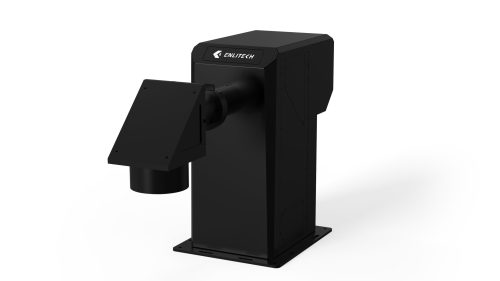
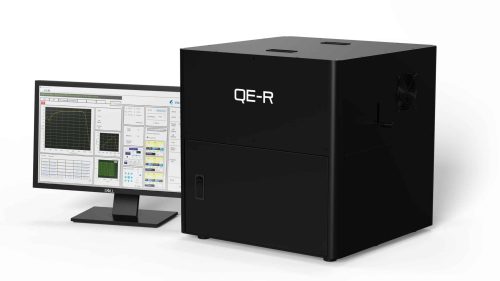
值得一提的是,Edward H. Sargent研究团队是信賴光焱科技Enlitech的长期合作客户,並且團隊中採購了Enlitech的QE-R光伏/太阳能电池量子效率测量解决方案和SS-X100 A+级光谱AM1.5G标准光谱太阳光模拟器等光焱科技知名专业检测设备。该团队在进行許多高精度测量和測試时,經常采用了這些專業的研究设备为研究结果的精确性和可靠性提供了强有力的支持。这些先进设备的使用,为研究团队获得高质量的实验数据提供了重要保障,从而为研究成果的可靠性奠定了坚实基础。

Supplementary Fig. 14 | Influence of isopropanol on film morphology and device performance. a. SEM images of the 3D perovskite film with and without isopropanol washing with scale bar of 1 μm, and b. their corresponding J–V curves.

Supplementary Fig. 18 | Stabilized efficiency. The steady-state output of the best-performance 2D perovskitoid-passivated PSC. The maximum power point of the device was tracked for 300 s under simulated one sun AM 1.5 G irradiation (100 mW cm-2) at room temperature within a nitrogen glovebox.
结论
- 在大面积(>1 cm²)钙钛矿太阳电池上实现了24.6%的准稳态光电转换效率,这是该领域的一个重要突破。
- 在85℃、空气环境下,器件展现出1250小时的稳定运行能力,显著提高了钙钛矿太阳电池的耐久性。
- 为解决钙钛矿太阳电池长期存在的稳定性问题提供了新的思路和方法。
- Supplementary Table 1 | Summary of operating stability of reported 2D perovskite passivated PSCs.
Certified QSS PCE (%) Temperature (°C) Lifetime (hours) Structure References 23.91 ~65 T95 = 500 p-i-n H. Chen, Nat. Photon., 20221 – ~60 T98 = 2000 n-i-p S. Sidhik, Science, 20222 – ~60 T90 = 500 n-i-p G. Yang, Nat. Photon., 20213 24.05 ~55 T87 = 2428 p-i-n Q. Jiang, Nature, 20224 – ~52 T87 = 1000 n-i-p F. Ansari, J. Am. Chem. Soc. 20205 – ~50 T97 = 1800 p-i-n R. Chen, Nat. Energy, 20236 – ~45 T95 = 1000 n-i-p S. You, Nat. Energy, 20237 – ~40 T90 = 1000 n-i-p F. Zhang, Science, 20218 – ~40 T95 = 500 p-i-n R. Azmi, Science, 20229 – ~29 T97 = 400 p-i-n F. Ye, Nat. Commun. 202210 – ~25 T99 = 100 n-i-p T. Zhang, Joule, 201811 – ~25 T75 = 1000 n-i-p A. Sutanto, Chem, 202112 – ~25 T90 = 2034 p-i-n W. Chen, Sci. Bull., 202113 – ~25 T99 = 35 p-i-n M. Degani, Sci. Adv., 202114 – ~25 T80 = 200 p-i-n S. Hu, Energy Environ. Sci., 202215 – ~25 T75 = 95 n-i-p S. Zhao, Small, 201816 - Supplementary Table 2 | (A6P)PbI3 single crystal. Crystal data and structure refinement for (A6P)PbI3 at 293(2) K. The CCDC number is 2362695.
Empirical formula C14 H19 I3 N2 O2 Pb Formula weight 835.20 Temperature 293(2) K Wavelength 0.71073 Å Crystal system monoclinic Space group P 1 21/c 1 Unit cell dimensions a = 9.1862(2) Å, α = 90° b = 8.0868(2) Å, β = 91.133(2)° c = 28.3556(8) Å, γ = 90° Volume 2106.04(9) Å3 Z 4 Density (calculated) 2.634 g/cm3 Absorption coefficient 12.415 mm-1 F(000) 1496 Crystal size 0.542 x 0.048 x 0.036 mm3 θ range for data collection 2.217 to 29.820° Index ranges -12<=h<=12, -10<=k<=10, -34<=l<=37 Reflections collected 6860 Independent reflections 6860 [Rint = ?] Completeness to θ = 25.242° 99.9% Refinement method Full-matrix least-squares on F2 Data / restraints / parameters 6860 / 77 / 201 Goodness-of-fit 1.047 Final R indices [I > 2σ(I)] Robs = 0.0370, wRobs = 0.1112 R indices [all data] Rall = 0.0453, wRall = 0.1195 Extinction coefficient . Largest diff. peak and hole 0.935 and -0.631 e·Å-3 - R = Σ||Fo|-|Fc|| / Σ|Fo|, wR = {Σ[w(|Fo|2 – |Fc|2)2] / Σ[w(|Fo|4)]}1/2 and w = 1/[σ2(Fo2) + (0.0712P)2 + 6.7334P] where P = (Fo2+2Fc2)/3
- Supplementary Table 3 | (A6P)SnI3 single crystal. Crystal data and structure refinement for (A6P)SnI3 at 293(2) K. The CCDC number is 2362702.
Empirical formula C14 H19 I3 N2 O2 Sn Formula weight 746.70 Temperature 293(2) K Wavelength 0.71073 Å Crystal system monoclinic Space group P21/c Unit cell dimensions a = 9.1164(4) Å, α = 90° b = 8.1973(3) Å, β = 90.649(4)° c = 28.0453(11) Å, γ = 90° Volume 2095.69(15) Å3 Z 4 Density (calculated) 2.367 g/cm3 Absorption coefficient 5.645 mm-1 F(000) 1368 Crystal size 0.07 x 0.02 x 0.02 mm3 θ range for data collection 2.234 to 28.498° Index ranges -12<=h<=12, -10<=k<=10, -32<=l<=37 Reflections collected 7367 Independent reflections 7367 [Rint = ?] Completeness to θ = 25.242° 99.8% Refinement method Full-matrix least-squares on F2 Data / restraints / parameters 7367 / 77 / 201 Goodness-of-fit 0.932 Final R indices [I > 2σ(I)] Robs = 0.0403, wRobs = 0.1004 R indices [all data] Rall = 0.0745, wRall = 0.1099 Extinction coefficient . Largest diff. peak and hole 0.808 and -0.566 e·Å-3 - R = Σ||Fo|-|Fc|| / Σ|Fo|, wR = {Σ[w(|Fo|2 – |Fc|2)2] / Σ[w(|Fo|4)]}1/2 and w=1/[σ2(Fo2)+(0.0557P)2] where P=(Fo2+2Fc2)/3
- Supplementary Table 4 | (A6BfP)PbI3 single crystal. Crystal data and structure refinement for (A6BfP)PbI3 at 294.8(2) K. The CCDC number is 2362697.
Empirical formula C18 H21 I3 N2 O2 Pb Formula weight 885.26 Temperature 294.8(2) K Wavelength 0.71073 Å Crystal system monoclinic Space group P21/c Unit cell dimensions a = 9.6385(2) Å, α = 90° b = 30.2533(7) Å, β = 102.050(2)° c = 8.1602(2) Å, γ = 90° Volume 2327.05(10) Å3 Z 4 Density (calculated) 2.527 g/cm3 Absorption coefficient 11.244 mm-1 F(000) 1600 Crystal size 0.158 x 0.07 x 0.069 mm3 θ range for data collection 2.161 to 28.499° Index ranges -12<=h<=12, -39<=k<=37, -10<=l<=10 Reflections collected 26833 Independent reflections 5476 [Rint = 0.0364] Completeness to θ = 25.242° 99.9% Refinement method Full-matrix least-squares on F2 Data / restraints / parameters 5476 / 12 / 236 Goodness-of-fit 1.043 Final R indices [I > 2σ(I)] Robs = 0.0213, wRobs = 0.0541 R indices [all data] Rall = 0.0253, wRall = 0.0554 Extinction coefficient . Largest diff. peak and hole 1.137 and -0.580 e·Å-3 - R = Σ||Fo|-|Fc|| / Σ|Fo|, wR = {Σ[w(|Fo|2 – |Fc|2)2] / Σ[w(|Fo|4)]}1/2 and w=1/[σ2(Fo2)+(0.0283P)2+1.5442P] where P=(Fo2+2Fc2)/3
- Supplementary Table 5 | (A6BfP)8Sn7I22 single crystal. Crystal data and structure refinement for (A6BfP)8Sn7I22 at 293(2) K. The CCDC number is 2362700.
Empirical formula C144 H168 I22 N16 O16 Sn7 Formula weight 6001.56 Temperature 293(2) K Wavelength 0.71073 Å Crystal system triclinic Space group P -1 Unit cell dimensions a = 8.3552(4) Å, α = 112.649(5)° b = 22.3263(11) Å, β = 97.618(5)° c = 26.6124(18) Å, γ = 90.074(4)° Volume 4533.6(5) Å3 Z 1 Density (calculated) 2.198 g/cm3 Absorption coefficient 4.752 mm-1 F(000) 2788 Crystal size 0.247 x 0.023 x 0.011 mm3 θ range for data collection 2.254 to 24.999° Index ranges -9<=h<=9, -26<=k<=26, -31<=l<=31 Reflections collected 17872 Independent reflections 17872 [Rint = ?] Completeness to θ = 25.000° 97.9% Refinement method Full-matrix least-squares on F2 Data / restraints / parameters 17872 / 1239 / 926 Goodness-of-fit 1.039 Final R indices [I > 2σ(I)] Robs = 0.0938, wRobs = 0.2332 R indices [all data] Rall = 0.1370, wRall = 0.2685 Extinction coefficient . Largest diff. peak and hole 2.480 and -1.606 e·Å-3 - R = Σ||Fo|-|Fc|| / Σ|Fo|, wR = {Σ[w(|Fo|2 – |Fc|2)2] / Σ[w(|Fo|4)]}1/2 and w=1/[σ2(Fo2)+(0.1370P)2+56.5796P] where P=(Fo2+2Fc2)/3
- Supplementary Table 6 | (A6BeP)PbI3 single crystal. Crystal data and structure refinement for (A6BeP)PbI3 at 293.00(14) K. The CCDC number is 2362698.
Empirical formula C18 H21 I3 N2 O2 Pb Formula weight 885.26 Temperature 293.00(14) K Wavelength 0.71073 Å Crystal system monoclinic Space group P21/c Unit cell dimensions a = 9.8155(3) Å, α = 90° b = 29.7952(9) Å, β = 102.384(3)° c = 8.1089(2) Å, γ = 90° Volume 2316.31(12) Å3 Z 4 Density (calculated) 2.539 g/cm3 Absorption coefficient 11.296 mm-1 F(000) 1600 Crystal size 0.223 x 0.117 x 0.048 mm3 θ range for data collection 2.124 to 28.490° Index ranges -12<=h<=11, -39<=k<=39, -10<=l<=10 Reflections collected 30971 Independent reflections 5462 [Rint = 0.0882] Completeness to θ = 25.242° 100% Refinement method Full-matrix least-squares on F2 Data / restraints / parameters 5462 / 12 / 236 Goodness-of-fit 1.053 Final R indices [I > 2σ(I)] Robs = 0.0373, wRobs = 0.0986 R indices [all data] Rall = 0.0455, wRall = 0.1018 Extinction coefficient . Largest diff. peak and hole 1.519 and -0.842 e·Å-3 - R = Σ||Fo|-|Fc|| / Σ|Fo|, wR = {Σ[w(|Fo|2 – |Fc|2)2] / Σ[w(|Fo|4)]}1/2 and w=1/[σ2(Fo2)+(0.0437P)2+5.8365P] where P=(Fo2+2Fc2)/3
- Supplementary Table 7 | (A6N)2(H5O2)Pb3I9 single crystal. Crystal data and structure refinement for (A6N)2(H5O2)Pb3I9 at 293.01(11) K. The CCDC number is 2362696.
Empirical formula C36 H48 I9 N5 O5 Pb3 Formula weight 2388.41 Temperature 293.01(11) K Wavelength 0.71073 Å Crystal system monoclinic Space group C2/c Unit cell dimensions a = 23.2376(8) Å, α = 90° b = 21.4847(4) Å, β = 128.323(5)° c = 14.1691(5) Å, γ = 90° Volume 5549.7(4) Å3 Z 4 Density (calculated) 2.859 g/cm3 Absorption coefficient 14.125 mm-1 F(000) 4224 Crystal size 0.437 x 0.071 x 0.029 mm3 θ range for data collection 2.234 to 28.499° Index ranges -29<=h<=27, -28<=k<=27, -18<=l<=18 Reflections collected 29553 Independent reflections 6393 [Rint = 0.0245] Completeness to θ = 25.242° 99.9% Refinement method Full-matrix least-squares on F2 Data / restraints / parameters 6393 / 12 / 265 Goodness-of-fit 1.038 Final R indices [I > 2σ(I)] Robs = 0.0207, wRobs = 0.0466 R indices [all data] Rall = 0.0265, wRall = 0.0479 Extinction coefficient . Largest diff. peak and hole 1.134 and -0.432 e·Å-3 - R = Σ||Fo|-|Fc|| / Σ|Fo|, wR = {Σ[w(|Fo|2 – |Fc|2)2] / Σ[w(|Fo|4)]}1/2 and w=1/[σ2(Fo2)+(0.0246P)2+6.6145P] where P=(Fo2+2Fc2)/3
- Supplementary Table 8 | (A6N)SnI3 single crystal. Crystal data and structure refinement for (A6N)SnI3 at 293(2) K. The CCDC number is 2362701.
Empirical formula C18 H21 I3 N2 O2 Sn Formula weight 796.76 Temperature 293(2) K Wavelength 0.71073 Å Crystal system monoclinic Space group P21/c Unit cell dimensions a = 16.3517(6) Å, α = 90° b = 16.3698(5) Å, β = 94.843(3)° c = 8.6722(3) Å, γ = 90° Volume 2313.03(14) Å3 Z 4 Density (calculated) 2.288 g/cm3 Absorption coefficient 5.123 mm-1 F(000) 1472 Crystal size 0.093 x 0.017 x 0.014 mm3 θ range for data collection 2.488 to 28.500° Index ranges -21<=h<=20, -21<=k<=21, -10<=l<=11 Reflections collected 29401 Independent reflections 5536 [Rint = 0.0428] Completeness to θ = 25.242° 100% Refinement method Full-matrix least-squares on F2 Data / restraints / parameters 5536 / 12 / 235 Goodness-of-fit 1.032 Final R indices [I > 2σ(I)] Robs = 0.0260, wRobs = 0.0506 R indices [all data] Rall = 0.0429, wRall = 0.0540 Extinction coefficient . Largest diff. peak and hole 0.630 and -0.468 e·Å-3 - R = Σ||Fo|-|Fc|| / Σ|Fo|, wR = {Σ[w(|Fo|2 – |Fc|2)2] / Σ[w(|Fo|4)]}1/2 and w=1/[σ2(Fo2)+(0.0199P)2+0.7929P] where P=(Fo2+2Fc2)/3
- Supplementary Table 9 | Summary of carrier lifetimes. TRPL of 3D perovskite films passivated by non-2D ligand o-PDEAI2, 2D (PEA)2PbI4, and 2D (A6BfP)8Pb7I22 perovskite films.
Condition τ1 (µs) P1 (%) τ2 (µs) P2 (%) τave (µs) Control 0.01 0.66 0.49 0.34 0.48 Non-2D Ligand 0.02 0.60 0.63 0.40 0.60 2D Perovskite 0.02 0.54 0.69 0.46 0.67 2D Perovskitoid 0.01 0.33 0.99 0.67 0.98 - Supplementary Table 10 | Previously certified stabilized photovoltaic performance of 1 cm2 n-i-p PSCs.
Certified PCE (%) Condition (Institution) Device structures Active area (cm2) Reference 24.6 AMPS (Newport) n-i-p 1.04 This work 22.6 MPPT (CSIRO) n-i-p 1.02 J. Peng, Science, 202117 24.8 MPPT (NIM) n-i-p 1.01 J. Zhou, Joule, 202418 - Supplementary Table 11 | Summary of operating stability of reported 1 cm2 PSCs.
Lifetime (hours) Encapsulation Temperature (°C) Relative Humidity (%) References T85 = 1250 Yes 85 ~50 This work T80 = 185 Yes 50 ~50 J. Lu, Energy Environ. Sci., 201819 T90 = 1600 Yes – – H. Su, Sci. China Chem., 202220 T95 = 260 No – N2 J. Peng, Science, 202117 T86 = 1000 Yes ~25 – E. Bi, Nat Commun, 201721
这些成果为钙钛矿太阳能电池的进一步发展和潜在的商业化应用奠定了基础。然而,要将实验室成果转化为大规模商业应用,仍然需要解决许多挑战,包括进一步提高效率、延长使用寿命、降低生产成本等。
随着这类研究的不断深入,钙钛矿太阳电池技术有望在未来的可再生能源领域发挥更大作用。这项研究为提高钙钛矿太阳能电池的性能提供了新的方向,为推动太阳能技术的进步做出了有意义的贡献。

推荐阅读
-
- Professor Edward H. Sargent’s Team Achieves Improved Charge Extraction in Inverted Perovskite Solar Cells with Dual-Site-Binding Ligands
- Joule Latest: Hou Yi from NUS and David S. Ginger from University of Washington team up to achieve a breakthrough 25% efficiency in Perovskite-Organic Tandem Solar Cells with Improved Wide-Bandgap Perovskite Stability
- Nature Highlight. Univ. Of Oxford-Henry J. Snaith & City University of Hong Kong Team Led by Prof. Feng Shien-Ping Unveils “Water-Activated Dynamic Passivation Technology” to Create High-Efficiency and Stable Perovskite Solar Cells with 25.1% Efficiency!